I was a Minolta guy for decades, but the last 20 years I have shot Nikon, and I haven’t regretted that choice

Shifting away from Minolta wasn’t difficult. There was essentially no choice since Minolta stopped making cameras. I did follow into the Konica-Minolta era, and owned a couple of bodies of that brand, but when that also seemed to get near an end, I opted for a major change.
Sony could have been a choice. At that time Sony bought the digital camera manufacturing from Minolta, and history has shown them to be very successful in that venture, creating a DSLR brand that delivered great cameras and great lenses – and great success for Sony.
Three options
In 2005, when I made the decision to change, I essentially had three options: Canon, Sony or Nikon. There were other DSLR manufacturers like Pentax, Olympus and even Samsung, but I basically ruled them out because of the limited access to lenses and accessories, particularly second hand, which has always been an important source of new gear for me.
Sony DSLRs were brand new in the market, but shared lenses with my existing Minolta DSLRs at that time, so choosing them would have given me a head start with regards to lenses, because I had quite a few Minolta lenses already.
I had friends who shot Canon as well as Nikon, and that gave me the opportunity to try handling these two brands, and Nikon won me over hands down. Even though the Canons I tried were really nice cameras, I just couldn’t get to terms with them. Nikon made me feel right at home – even though the manual focus was the opposite direction of Minolta’s.
Still, the Nikon bodies felt better in my hands, and I finally opted for the brand new Nikon D200, which was very favorably reviewed by the photo media that I read back then.


Nikon D200
The Nikon D200 was a 10 megapixels DX sensor camera, meaning a cropped sensor, smaller than the 24*36 full frame, which I knew from my film cameras.
But I was coming from the magnificent Minolta 7D, which was 6 megapixels, and a sensor that measured the same 16*24mm as the Nikon DX sensors, so I was already used to calculating focal lengths and working with cropped a sensor.
And at twice the resolution the D200 seemed a pretty good choice.
A friend of mine had used Nikon film cameras for a while, and had bought a D70 when it came out. He could lend me some glass for my new DSLR-beast. I borrowed a very humble kit lens from him while waiting for a Nikon 18-200mm to arrive. They were much sought after, and not easy to find.
Once the super zoom came, I could use that, but soon got the appetite for more – and something more professional.
I did some work for a US based friend, and we agreed that he could pay me in lenses, and he brought me a 17-55mm f/2.8 and a 70-200mm f/2.8, which was exactly what I urged to own for the new digital Nikon body.


It shined!
My current image archive contains close to 70,000 images shot with the D200, so it was really put to work! Using the two new lenses, it really shined, and shot some great pictures.
The archive tells me that the 17-55 shot about 20,000 shots on the D200 while the 70-200 clocked in at about half.
Before that the 18-200 had shot some 8,000 images, but was retired when the big lenses arrived. I later sold it.
Soon after, I acquired more lenses, and bought a Sigma 10-20mm (just short of 6,000 shots on the D200), a Nikon 85mm f/1.8 (2,600 shots), a Sigma 50mm f/1.4 (1,000 shots) and a Nikon 10.5mm fisheye (just shy of 900 shots).


Nikon D40
At this point I had quite a few lenses, and shifting back and forth on the D200 was slightly annoying, so I went on the lookout for a second body.
I found a really inexpensive, used D40 body and got a pretty decent 6 megapixels camera for very little money.
I wasn’t in any way a performer like the D200, but sensor technology had developed, and its image quality was surprisingly good.
AF was slow and required lenses with built-in focus motors (AF-S), but it did its job, and has delivered 17,500 images, and is still fully functional. I can see from the archive that the D40/Sigma 10-20mm was a favorite combo, and it stands for more than a third of all the images shot with this dainty body.


Nikon D300s
After having shot with the D200 for about 5 years, it was pretty worn down by sand, water and general abuse, and also lagging a bit on technology, so I decided to go for the D300 from 2007 as a replacement.
One review said: “There's simply no better semi-professional digital SLR on the market”.
I actually wound up buying one better and got a D300s, which was generally considered one of the best DX cameras available around 2010. It wasn’t a big step up in resolution – from 10 to 12 megapixels – but image quality, AF and high ISO was better, and it was altogether a much better camera than the D200.
My lens collection was also growing, and a Sigma 8-16mm zoom did its chores (6,200 frames) while the Sigma 18-35mm f/1.8 and the Sigma 30mm f/1.4 got way less use than I had imagined when I bought them (2,100 and 900 shots respectively). A Sigma 20mm f/1.8 bought in a spur of the moment got way more use (3,000 shots), but it was still the two beasts, 17-55 and 70-200, which were the bread-and-butter lenses, delivering 11,000 and 4,600 shots respectively – all these shot on the D300s.


Nikon D5100
I wanted to play with some video, and looked around for a Nikon body with some decent video capabilities. In 2012 I bought a D5100 to replace the D40 as a second body and to use for some video experimentation.
I didn’t shoot much video, but the D5100 delivered more than 12,000 frames before it croaked after 10 years of service.
I imagine my using it as a webcam – which is essentially shooting video – was too much for it, sensor being on for typically 30-60 minutes at a time with the shutter having to close and open now and then to keep the camera from running hot.
The mirror/shutter simply stopped working, and I decided to buy a new (used) body as a replacement, because that could just be plugged in utilizing the same power supply and software as the old one. I got the body and 2 kit lenses for almost nothing, and the new D5100 is still working well as a luxury webcam, and has shot quite a few stills too, especially doing macro work with my Nikon 40 and 85mm DX macros.
Nikon D700
I wasn’t particularly looking for a new camera, but back in 2014 I was browsing the local classifieds for used Nikon gear, mainly lenses and various accessories.
A used Nikon D700 caught my eye.
It was for sale at a really low price, mainly because of a scratch on the sensor, meaning that it was sold as seen with no guarantees. The seller sent me raw images from the camera, and there was no trace of any scratch on them.
I bought it and had it mailed, and could indeed see the scratch, but not any blemishes in the images I shot.
So I was now a full frame Nikon body owner, and entered a new world when it came to lenses.


Lenses with a new life
Suddenly all my full frame lenses could really shine, and my Sigma 20mm f/1.8 became a darling lens, really delivering on the D700 (and later on the D750 and D850 mentioned below).
But also the Lomo lenses – the Lomography Petzval and the Daguerreotype Achromat – could do wonders on full frame, and my newly acquired pancake lenses as well as my trusty 85mm f/1.8 were often found on the D700.
I shot 2,000 frames with the D700 the year I bought it, and it delivered excellent quality. It was still “just” 12 megapixels, but able to shoot decently at 1,600 and even 3,200 and 6,400 ISO.
Of course the D700 was not particularly useful with my trusty workhorses the 17-55mm, 8-16mm and 10-20mm, all DX lenses, but I had full frame lenses to almost cover for them.
I still shot mainly with the D300s.
Nikon D750
One day in 2024 a good friend announced that he was selling his Nikon D750. It came with a handful of lenses and an SB-900 flash, and the lot was a true bargain. Being sold by a person I knew well, I trusted that all was in order, and that was also the case.
It has shot a couple of thousand images, delivering impeccable quality and handling like a charm. It’s full frame like the D700, but certainly a better camera, and the only reason it’s stopped at about 2,000 shots is that I wound up with a D850 too.
Its 24 megapixels was a vast improvement to the 12 I had as a previous max, and again it’s only outdone by the D850.


Nikon D850
A very near and dear friend of mine was unfortunately diagnosed with terminal cancer, and before he passed away in 2025, he gave me his D850.
Yes, literally gave me!
The deal was that I gave his brother my D700, because the brother needed a body with built-in AF-motor for some of the lenses he inherited from my friend.
Of course I gladly parted with the D700 given that it would be replaced with a D850, which would outshine everything that I already had, and really make all my FF-lenses deliver.
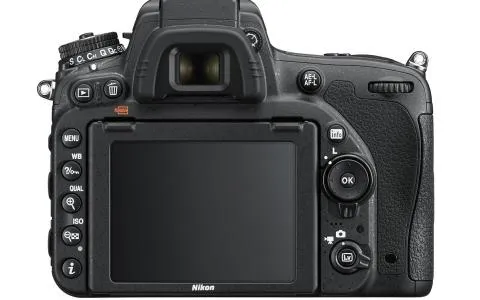
The D850 is a true beast!
It’s a 46 megapixels full frame camera, and works miracles in high ISO, AF and several other fields. It truly delivers, and when I combine it with essentially any of my FF lenses, I get sublime technical quality.
It’s now my go-to camera, but has still only shot about 1,000 images in the short period that I’ve had it. A large part of those have been with the 105mm macro, which was also a gift from my sick friend, but both my 20mm f/1.8 and the 28-300mm multi-zoom from the D750 deal have taken their turns.


Where does this end?
Well, when it comes to Nikon D cameras it probably ends here.
The D850 was one of the last D cameras made by Nikon. There was a D6 and a D780 after that, but I don’t think I’ll be needing any of those. D6 is a low rez, high speed camera, which I don’t need, and the D780 is a souped up D750 – and that I already have.
So D850 seems to be the end of the line with regards to Nikon D cameras.
If I want to continue with Nikon, it’s now Z and a brand new lens mount, meaning that quite a few of my lenses will probably be obsolete. There’s a converter available, but I’m not sure it will offer justice to my lens lineup, and considering my investment in that, I think my current Nikon D bodies will get many more years of good service.
Lenses and accessories are less expensive than ever, and maybe some day I’ll be able to afford that 300mm f/2.8 or an even longer and bright telephoto lens.
Until then I’m doing pretty well with what I have.