No, not by using illegal copies and not by using free or open source software. I do it by running software that I bought and own.
I’m an old geezer, and when I started working on computers there was hardly any imaging software to buy.
Digital cameras were far into the future and working on images was something with red light and smelly liquids.

I bought Photoshop
When I ventured into the digital realm “for real” around year 2000, there was a small number of options related to image handling. Most cameras shot jpeg-files, and they could be edited in basically any image-editing program.
In the beginning I used what I had or what the camera vendors supplied. It was quite common for them to include software with the camera.
But I wanted the best, so I bought a copy of Adobe Photoshop.
Photoshop was state-of-the-art and what pros used, and I was used to it from my work as a magazine journalist and editor. In that job it was typically Adobe wall-to-wall: InDesign for layout, Illustrator for drawing and Photoshop for image work.
We’re talking many years ago here, so what I bought was Photoshop 6, which came out in 2000. And we’re not talking Photoshop CS6, but just Photoshop 6, period.
Back then you got a cardboard box, a CD and even a printed manual! I still have it all.
This was released in a version 7 a couple of years later, and reasonable as Adobe was back then, they allowed me to upgrade for a nominal fee – way less than the pretty steep price of buying it from new.
That’s what I still use!
I haven’t upgraded since, so I’m doing my day-to-day photo work on an piece of software, which is now close to 25 years old.
And you know what?
It works!
And it’s compact, fast, flexible, stable ... and, most importantly, free.
I own it.
It doesn’t connect to the Internet.
It doesn’t nag me to upgrade or pay.
It doesn’t shut me out because I haven’t paid a subscription for 25 years.
It doesn’t require me to store images in any cloud or outside server – or even have an Adobe account for that matter.
It’s not worn or broken, and it spins up in seconds on my modern PC, executes most operations instantly, and delivers excellent quality images.
Nobody can see that the program, which prepared the images I show them, is 25 years old.
Lightroom won me over
When RAW images started coming out of cameras, I needed something that could convert them, and in the beginning that was typically software from the camera manufacturers – in my case Minolta and Nikon.
They delivered CDs (remember them?) with suitable software with their cameras, and like Photoshop, that was my software – like, I owned it.
But all the camera name offers were lagging in facilities, workflow and organization, and at the time, third party software started emerging.
I started out trying various programs like Bibble, Phase1 and Rawshooter, and stopped on Rawshooter, which did what I needed in a way I liked.
I tried Lightroom, which came out in 2007, and hated it.
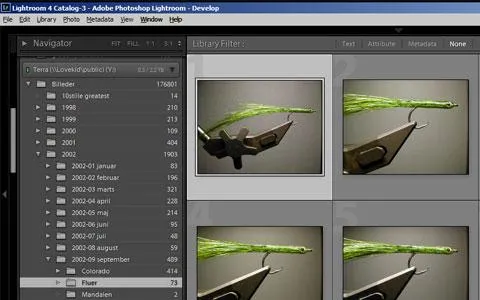
But later on I tried it again, and I may have grown wiser (or the software better), because I wound up buying it. I think my first version was 4, which was released in 2012.

I upgraded continuously until version 6.14 from 2017 – still at fair upgrade prices and still with software that I downloaded, installed and owned ... and still own. I can install it on as many PCs as I want (currently it’s on 4), and like Photoshop it runs without Internet-connection, doesn’t nag me and requires no licenses.
It is in other words good old-fashioned stand-alone software.

Adobe’s shitstorm
Since my last upgrade Adobe has of course released many new versions of both Photoshop and Lightroom, and these have basically all been cloud and subscription based releases, meaning no net equals no software, and no payment equals no software.
I write last upgrade and not latest on purpose ... I won’t upgrade again unless the terms change drastically.
I didn’t jump on the subscription bandwagon, and judging from the various reactions online, I made a good choice by not doing so.
I didn’t jump on the subscription bandwagon
Adobe has received so much flak for their conditions and pricing, and people seem to be leaving in drogues, going to Gimp, Affinity and other, mostly free, alternatives.
Personally I see no reason to leave. I haven’t been plagued by Adobe, and their old software runs perfectly on my PCs and does exactly what I need. Lightroom and Photoshop even integrate nicely, and I can launch PS from LR.
I don’t need the newest features – and definitely don’t need AI, which seems to be the big new thing – and I’m pretty contempt with the way things are.